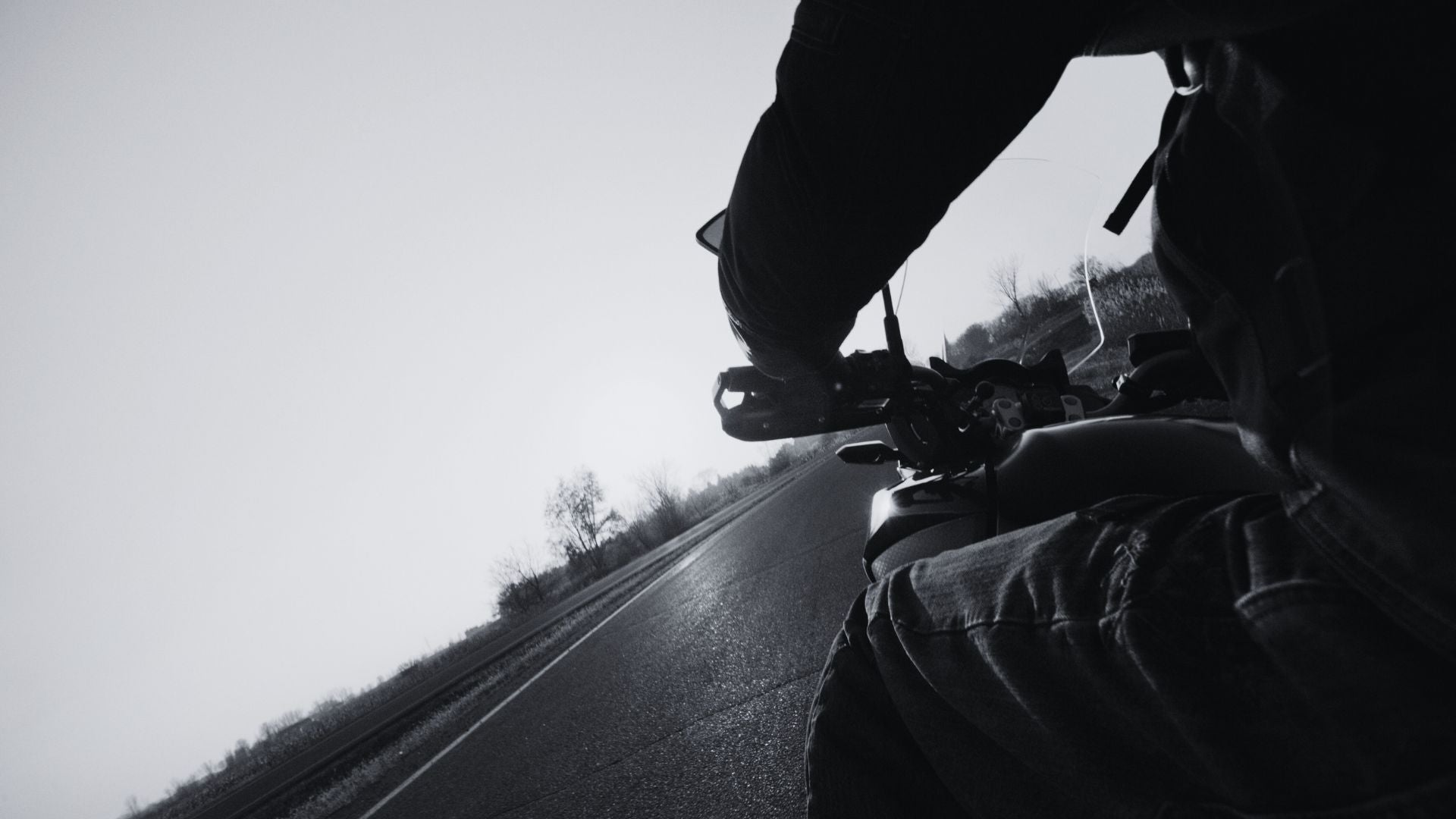

Wet Weather Traction: How to Read Road Hazards & Manage Slick Asphalt

The sky turns charcoal, the first heavy drops splatter across your visor, and that distinct petrichor smell of damp dust hits your nostrils. For plenty of riders, the sight of incoming rain triggers an immediate spike in blood pressure and a panicked hunt for the nearest overpass. It makes sense. Rain changes the basic chemistry between rubber and pavement in seconds, cutting available traction down by roughly a third. But getting caught in a summer downpour does not have to turn into an emergency if you understand the physics under your tires. Growing up riding dirt bikes across wet Ohio clay, I learned early that managing low-traction surfaces comes down to smooth inputs and reading the terrain two steps ahead. Whether Sean is managing lean angles on two wheels or I am holding a stable three-track line on my Can-Am Spyder RT, wet weather riding rewards anticipation, smooth mechanics, and an eagle eye for changing road surfaces.
-
Audit Duration: Ongoing visual scanning and operational discipline in wet conditions.
-
Core Hazards Managed: First-twenty-minute oil lift, hydroplaning ruts, painted road markings, tar snakes.
-
Essential Tooling: High-visibility rain gear, Pinlock anti-fog visor insert, hydrophobic face shield treatment.
-
Critical Operational Rule: Never initiate aggressive trail braking or abrupt throttle snaps while banked on wet pavement; separate directional changes from heavy braking inputs.
Why is asphalt slickest during the first twenty minutes of rainfall?
The opening minutes of a rainstorm are statistically the most treacherous miles you will ride. Over weeks of dry summer weather, passing cars, semi-trucks, and tour buses drop engine oil, transmission fluid, and diesel fuel into the microscopic pores of the asphalt.
When rain begins to fall lightly, that moisture does not wash the contaminants away; it floats them to the surface.
Oil is lighter than water. The initial moisture seeps into the pavement grooves and lifts a fine film of petroleum, grease, and tire rubber dust straight to the top of the asphalt aggregate. This creates a slick emulsion that looks like rainbow-colored swirling water in the center of the lane.
Until a steady downpour has pounded the road for at least twenty minutes with enough volume to flush that film into the ditches, treat every intersection, toll plaza, and highway on-ramp like an ice rink.
What visual hazards should you hunt for when reading wet asphalt?
Reading wet roads requires shifting your focus from standard traffic flow to micro-textures on the pavement. The color and sheen of the asphalt tell you exactly what kind of friction coefficient you are dealing with before your tires make contact.
-
Dull Matte Asphalt: This is your safest surface. The water is actively draining through the aggregate voids, leaving stone points exposed to bite into your tire sipes.
-
Mirrored Standing Water: If the road surface reflects headlight beams and overhead tree branches like a clean mirror, the pavement micro-texture is fully submerged. Your tires are at high risk of hydroplaning if your tread depth cannot disperse that volume.
-
Tar Snakes and Crack Sealants: Road crews use rubberized bitumen to seal asphalt fractures. Dry, they provide adequate grip; wet, they turn into slick, glass-like bands. If you must cross them in a curve, stand the bike up slightly, keep your throttle steady, and avoid steering corrections while rolling over the seam.
-
Painted Road Markings: Crosswalk stripes, double-yellow divider lines, and turn arrows are applied with thick thermoplastic paint that creates an impenetrable barrier to water. They do not drain. Crossing painted lines under braking or acceleration will break tire traction instantly.
-
Bridge Expansion Joints and Manhole Covers: Metal infrastructure provides virtually zero friction when soaked. Roll across steel grate bridges, drawbridges, and diamond-plate utility covers with a completely neutral throttle and zero braking input.
How do you prevent hydroplaning across truck-rutted highways?
On high-volume freight routes and rural highways, heavy commercial semi-trucks carve deep, parallel depressions into the asphalt. During heavy rain, these depressions stop draining and turn into twin rivers of standing water trapped in the lane.
If you ride directly down the middle of a truck channel, your tires will eventually encounter water deeper than your tread sipes can evacuate. When that happens, a wedge of high-pressure water builds in front of your tire contact patch, physically lifting the rubber off the aggregate. You lose all steering authority and braking friction in an instant.
To defeat hydroplaning, pick your lane position with surgical intent:
Rely on the wheel tracks of the passenger vehicles ahead of you. A standard car tire evacuates gallons of water per second, temporarily clearing two narrow, drier tracks in the lane. Stagger your position into whichever car tire track offers the best forward sightlines and buffer distance from oncoming traffic.
Avoid the oily center stripe entirely, especially when approaching traffic lights where stopped vehicles constantly idle and drop fluids. If you run a three-wheeler, remember you are tracking three separate paths; you must position the vehicle so neither your front steering tires nor your wide center rear drive tire are trapped in deep standing water troughs.
How should you adjust your throttle, braking, and body mechanics?
Smoothness is your ultimate safety net in the wet. Jerky inputs, stabby front brakes, and aggressive downshifts break tire adhesion when traction margins are thin.
-
Throttle Management: Roll the throttle on like you are squeezing a sponge rather than snapping a switch. If your machine features an electronic rain mode, switch it on; it softens the initial fuel delivery map, dials back torque response, and raises the sensitivity of your traction control.
-
Braking Inputs: Extend your braking distances by at least double. Apply initial brake pressure gently to compress your front suspension and plant the tire carcass against the road surface before squeezing for actual stopping power. Rely more heavily on your rear brake than you normally would in the dry to stabilize the chassis without overloading the front contact patch.
-
Body English: Keep your arms, shoulders, and grip completely relaxed. Tensing up transfers chassis instability straight into the steering head. Shift your upper torso slightly toward the inside of the curve while keeping the motorcycle more upright; reducing the machine's physical lean angle keeps you deeper on the meat of the tire's center tread where water evacuation channels are deepest.
-
Electronic Stability Intervention: On machines equipped with advanced systems like Vehicle Stability System (VSS), sudden wheel spin or lateral slip will trigger immediate electronic intervention. Do not fight the handlebars or panic if the ignition cuts or the stability system pulses an individual wheel brake; keep your eyes focused down-road toward your exit and maintain a smooth, steady throttle hand while the computers work to re-establish chassis composure.